Europe
Malta
Lagoons, knights, and 7,000 years of history
Malta is a sun-soaked microcountry of Knights-era cities, lagoon swimming, and 7,000 years of layered history.
Overview
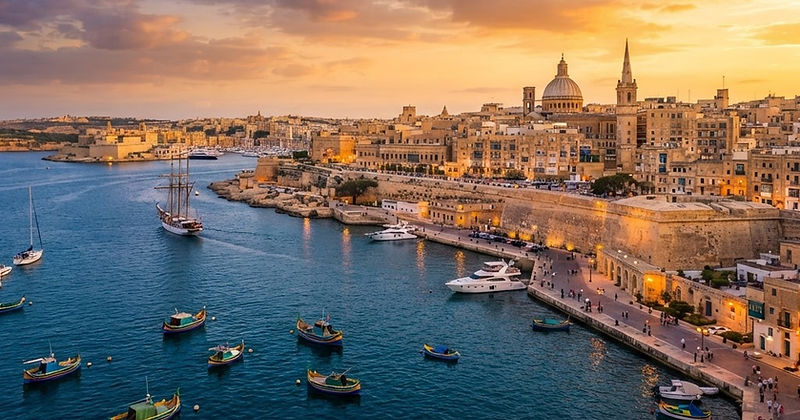
English-speaking and compact, Malta packs three inhabited islands with megalithic temples, baroque Valletta, and famously clear water.
Why visit
Malta offers a unique intersection of Mediterranean leisure and profound historical depth, where you can swim in crystal-clear lagoons by morning and explore Neolithic temples by afternoon. Its compact size makes it incredibly accessible, allowing you to traverse millennia of architectural mastery from the fortified streets of Mdina to the baroque splendor of Valletta.
Best time to travel
April–June and October–November for warm, quieter months. July–August is hot and crowded; winter is mild.
Major attractions
Valletta's St. John's Co-Cathedral, the Blue Lagoon (Comino), Mdina, the Hypogeum, and Marsaxlokk fishing village.
Local transportation
Buses cover Malta and Gozo cheaply; ferries link the islands. The island is tiny — distances are short.
Food & culture
Maltese cuisine is a rustic blend of Italian influence and North African spice, highlighted by signature dishes like rabbit stew, pastizzi pastries, and fresh lampuki fish. Dining is a social, leisurely affair where local wine flows freely, and it is considered polite to wait for everyone at the table to be served before starting your meal.
Sample budget
Budget: $50–75/day. Mid-range: $120–200/day. Ferries and buses keep transport cheap.
Safety & practical tips
Very safe. Sun and sea are the main risks — watch currents at the Blue Lagoon's busy times.