North America
Canada
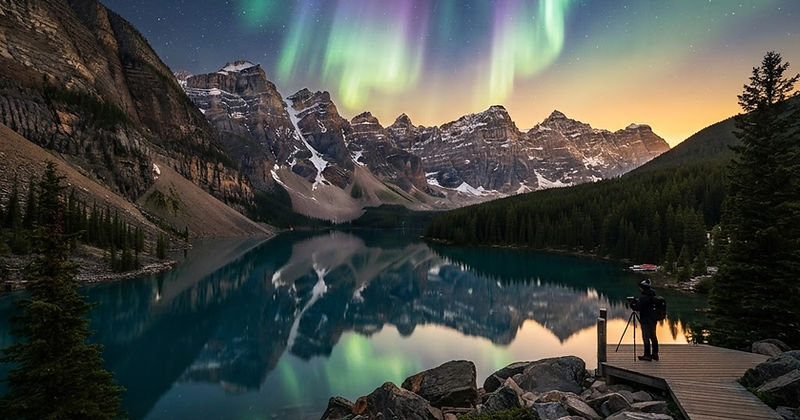
Rocky Mountains, lakes, and northern lights
Canada offers the Rocky Mountains, the world's longest coastline, and wilderness from coast to coast to coast.
Overview
Canada is enormous and beautiful — Banff's turquoise lakes, Quebec's French old towns, the Maritimes' coast, and the Yukon's aurora. Wildlife and space are the draw.
Why visit
Canada presents an unparalleled expanse of untouched wilderness, ranging from the jagged, snow-capped peaks of the Rockies to the turquoise glacial lakes of Alberta. It is a destination where urban sophistication in cities like Vancouver and Quebec City seamlessly meets rugged outdoor adventure. Travelers can experience the rare majesty of the northern lights, world-class skiing, and the longest coastline on the planet in one singular journey.
Best time to travel
June–September for mountains and lakes. December–March for skiing. February–April for northern lights in the north.
Major attractions
Banff and Jasper, Vancouver and Vancouver Island, Quebec City, Niagara Falls, and the Canadian Rockies.
Local transportation
Flying for long distances. A car (or campervan) is the best way to see the Rockies and countryside. VIA Rail for select routes.
Food & culture
Canadian cuisine is defined by farm-to-table freshness and iconic comfort foods like poutine and Atlantic lobster. Maple syrup is a regional staple incorporated into both savory and sweet dishes, while coastal regions celebrate fresh catches like Pacific salmon. Dining culture is typically relaxed and inclusive, with tipping between fifteen and twenty percent considered standard practice.
Sample budget
Budget: $60–90/day. Mid-range: $150–250/day. National park passes required. Campgrounds save money.
Safety & practical tips
Very safe. Wildlife (bears) requires precautions in the backcountry — carry bear spray. Winter driving needs winter tires.